Resolution of Land Disputes in Binh Tan District is a matter of significant concern amid the rapid urbanization in Ho Chi Minh City. With accelerated economic development and population growth, disputes relating to land use rights have become increasingly common, particularly in strategic areas such as Binh Tan District, which holds substantial real estate potential. Effectively resolving land disputes not only safeguards the legitimate rights and interests of the involved parties but also contributes to maintaining social order and promoting sustainable local development. To achieve efficient resolution, compliance with legal regulations is essential, alongside the application of mediation and dialogue measures to minimize conflicts and foster consensus among the parties.
Legal Basis
– Civil Code 2015;
– Civil Procedure Code 2015;
– Land Law 2024;
– Decree 102/2024/NĐ-CP;
– Resolution No. 04/2017/NQ-HĐTP;
– Circular 24/2014/TT-BTNMT;
– Other guiding documents on the Land Law.
Related articles:
How Much Does It Cost to Hire a Lawyer for Land Disputes?
Law Firm Providing Online and In-Person Land Law Consultation in Ho Chi Minh City
Common Types of Land Disputes in Binh Tan District
– Disputes over determination of ownership of land use rights and residential housing;
– Disputes concerning boundaries between land parcels or plots;
– Disputes regarding reclamation of land use rights, ownership of residential housing, and assets attached to land;
– Disputes over land use rights, ownership of residential housing, and attached assets in cases of divorce between spouses;
– Disputes over land use rights, ownership of residential housing, and attached assets in the division of inheritance estate;
– Disputes arising from contracts for transfer of land use rights and ownership of residential housing;
– Disputes related to deposit contracts for transfer of land use rights and ownership of residential housing;
– Disputes under contracts for lease of residential housing, factories, warehouses, or offices;
– Disputes concerning contracts for donation, mortgage, guarantee, or capital contribution using the value of land use rights;
– Disputes related to complaints concerning compensation, support, and resettlement in cases of land recovery;
– Disputes involving construction of works on land and assets on land;
– Disputes over land use rights and ownership of residential housing by foreign-invested individuals or enterprises in Vietnam.
Methods for Resolving Land Disputes

Mediation
Mediation of land disputes is a flexible, adaptable, and effective measure aimed at enabling the disputing parties to reach a mutually agreed solution to resolve conflicts and differences in land-related legal relationships on the basis of voluntary agreement.
Land dispute mediation may be conducted in two forms: grassroots mediation and mediation at the People’s Committee of the commune, ward, or township where the dispute arises.
If mediation is successful, the dispute is concluded; if mediation fails, the law provides different resolution paths depending on the specific case (filing a lawsuit, requesting resolution by the district or provincial People’s Committee).
Resolution of Land Disputes by the People’s Committee
Clause 1, Article 235 of the Land Law 2024 provides that the State encourages parties to land disputes to engage in self-mediation or to resolve land disputes through grassroots mediation.
This is a method encouraged by the State, but the outcome is not binding on the parties and depends on their goodwill.
Clause 2, Article 235 of the Land Law 2024 stipulates that where parties to a land dispute cannot reach mediation, they shall submit an application to the People’s Committee at the commune level where the disputed land is located for mediation.
Accordingly, if the parties cannot mediate but wish to resolve the dispute, they must submit an application to the People’s Committee of the commune, ward, or township where the land is situated for mediation; failure to mediate will prevent filing a lawsuit or requesting resolution by the district or provincial People’s Committee.
Filing a Lawsuit at the People’s Court
Under current legal provisions, civil procedure is applied to resolve land disputes in one of the following cases:
– Land disputes where a party possesses a Certificate or one of the documents specified in Article 137 of the Land Law 2024;
– Disputes over assets attached to land (residential housing, constructed works, etc.);
– Land disputes where a party does not possess a Certificate or any of the documents specified in Article 137 of the Land Law 2024.
Procedures for resolving land disputes at Court follow civil procedure law. The parties directly file a lawsuit petition with the competent People’s Court. Within the statutory time limit, the Court will accept the case, conduct mediation, and bring the land dispute matter to trial. The trial may proceed through two levels: first-instance trial and appellate trial, depending on the nature of the land dispute and any appeals or protests by the relevant parties.
Related articles:
Law Firm Providing Online and In-Person Land Law Consultation in Ho Chi Minh City
Latest Updated Costs for Engaging Lawyers to File Lawsuits in Ho Chi Minh City
Dossier for Resolution of Land Disputes
– Lawsuit petition;
– Minutes of unsuccessful mediation by the People’s Committee at the commune level;
– Personal identification documents of the plaintiff (citizen identity card, household registration book, or residence confirmation);
– Certificate of land use rights;
– Other documents: cadastral records, map excerpts, etc.
Procedures for Resolving Land Disputes at Court
**Step 1: Submission of the Dossier to the Competent Court**
Location: People’s Court at the district level where the disputed land is located.
Submission methods: One of the following three forms:
– Direct submission at the Court;
– Submission via postal services;
– Online submission through the Court’s electronic information portal (if available).
**Step 2: Acceptance of the Case by the Court**
If the dossier is incomplete, the Court will request supplementation.
If the dossier is complete:
– The Court issues a notice requiring payment of the court fee advance;
– The plaintiff pays the advance at the tax authority as per the notice and submits the receipt back to the Court;
– The Court then formally accepts the case.
**Step 3: Payment of Court Fees / Advance Court Fees**
**Step 4: Mediation of the Dispute**
**Step 5: Case Preparation for Trial**
Preparation period: 04 months; for complex cases, an extension of no more than 02 months may be granted (total 06 months – Article 203 of the Civil Procedure Code).
During this phase, the Court organizes mediation at the Court. If mediation fails, the Court will bring the land dispute case to first-instance trial (unless suspension or termination applies).
After the first-instance judgment is issued, the disputing parties have the right to appeal if they disagree with the judgment and have grounds to do so.
**Step 6: Bringing the Case to Trial**
To determine the statute of limitations, it is necessary to identify the starting point, ending point, and determination point. Calculation of the limitation period must comply with the rules on time limit computation.
Determination of the Statute of Limitations for Land Dispute Resolution
Specifically, Article 155 of the Civil Code 2015 provides that the statute of limitations for initiating a lawsuit does not apply in the following cases:
– Claims for protection of personal rights not associated with property;
– Claims for protection of ownership rights, except where the Civil Code 2015 or other relevant laws provide otherwise;
– Disputes over land use rights as prescribed by the Land Law;
– Other cases as prescribed by law.
Accordingly, the statute of limitations for initiating a lawsuit does not apply to disputes concerning land use rights under the provisions of the Land Law.
Support Services for Consultation on Land Dispute Resolution Procedures in Binh Tan District Provided by BKC Law
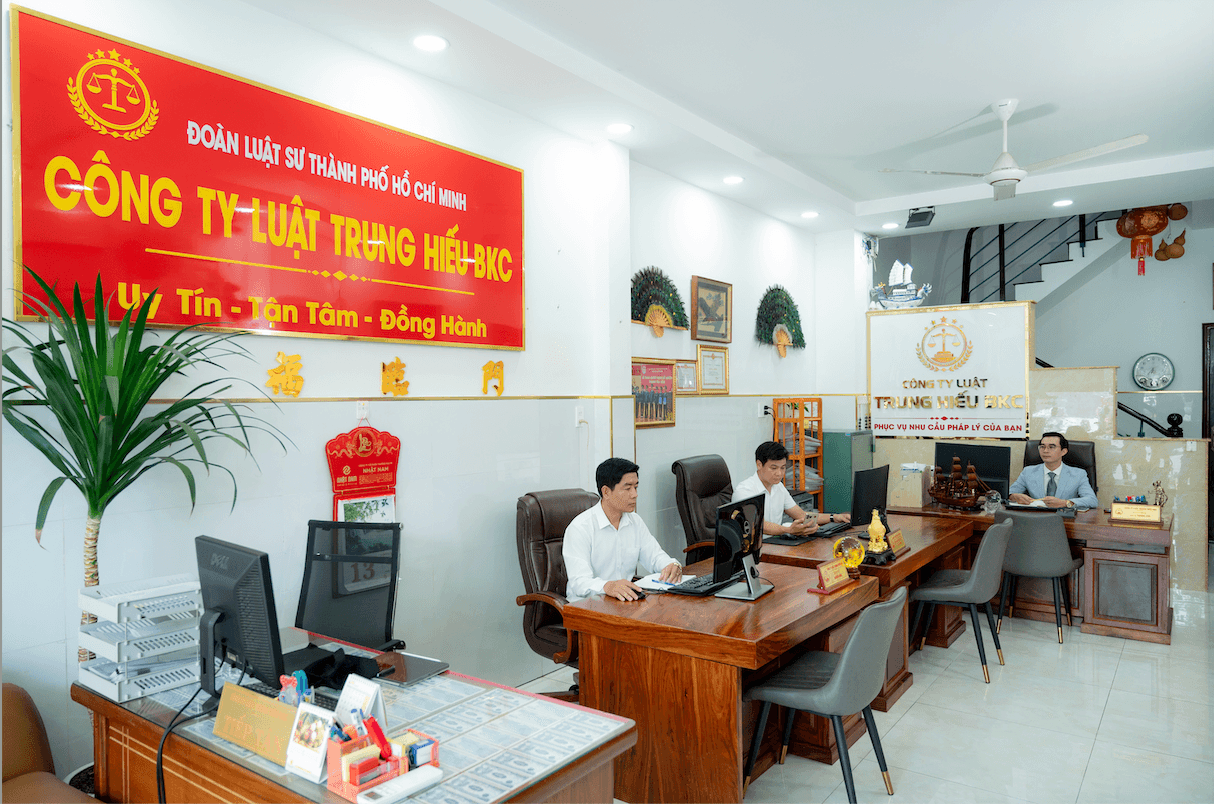
BKC Law provides dedicated and professional consultation services on procedures for resolving land disputes in Binh Tan District. We are committed to assisting clients in effectively and promptly addressing legal issues related to land disputes, including legal advice, dossier preparation, representation in dealings with state authorities, and protection of rights before the courts. Our experienced team of lawyers stands ready to accompany clients throughout every stage of the matter to ensure maximum protection of their legitimate rights and interests.
To receive free legal consultation at BKC Law, please contact our lawyers using the following information:
Telephone: 0901 3333 41
Email: info@bkclaw.vn
Branch in District 1: 9th Floor, Diamond Plaza Building, 34 Le Duan Street, District 1, Ho Chi Minh City
Branch in Binh Tan: 41 Ten Lua Street, Binh Tan District, Ho Chi Minh City
Related articles:
Detailed Procedures for Filing and Resolving Land Disputes – Updated 2024
Latest Updated Package Fees for Lawyer Consultation on Land Law
Không có tag nào


.svg)
.svg)