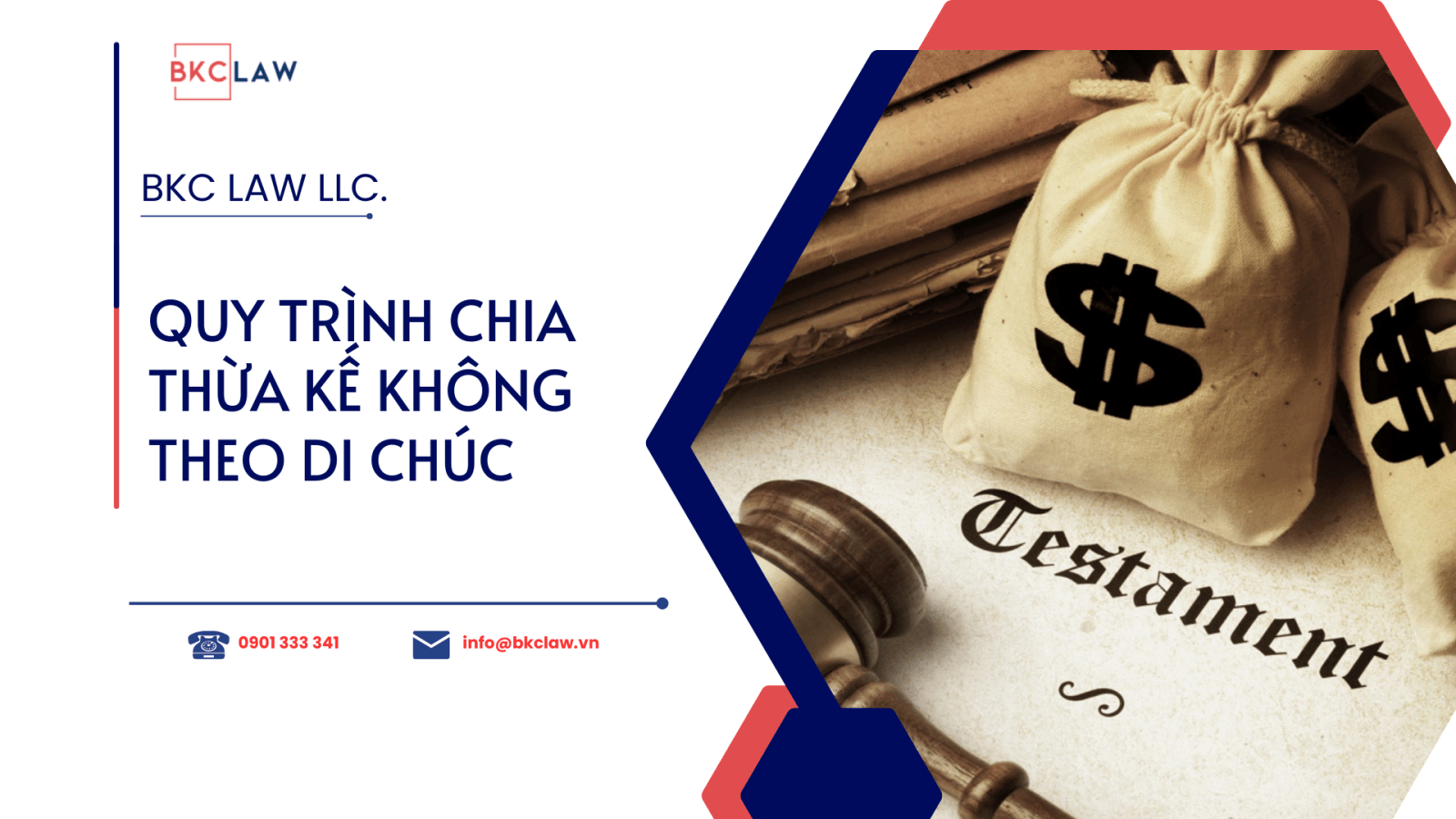
Procedures for Division of Inheritance constitute an important legal process that ensures the equitable distribution of a deceased person’s assets to the heirs in accordance with the law or the will. However, this procedure is often complex, involving numerous legal regulations and required documents. To prevent disputes and safeguard the rights and interests of all parties, it is essential to clearly understand the process and prepare a complete dossier. In this article, we provide detailed guidance on the basic steps to carry out the inheritance division procedure effectively and lawfully.
Legal Basis for Inheritance
Inheritance matters in Vietnam are primarily governed by:
– The Civil Code 2015 (from Article 609 to Article 662).
– The Land Law 2024 (applicable to inheritance of immovable property).
– The Law on Notarization 2014 (regulating notarization of wills and agreements on division of inheritance).
Forms of Inheritance
Inheritance by Will
Inheritance by will occurs when the person leaving the estate has made a valid will.
Conditions for a valid will:
– Form: A will may be made in writing or orally.
– Written will: May be notarized or non-notarized. A non-notarized written will is considered valid only if it satisfies the conditions set forth in Clause 1, Article 630 of the Civil Code 2015.
– Oral will: Considered valid only if declared before at least two witnesses and recorded in writing within five working days from the date of declaration.
Content:
– Clearly identifies the heirs and the portion of assets allocated.
– Does not violate prohibitions of law or contravene social ethics.
– Capacity of the testator:
+ The testator must be lucid and sound of mind when making the will; not subject to deception, threat, or coercion.
+ A will made by a person aged 15 to under 18 must be in writing and approved by parents or guardian.
+ A will made by a person with physical limitations or illiterate must be recorded in writing by witnesses and notarized or certified.
Effect of the will:
The will takes effect from the time of opening of inheritance (upon the death of the person leaving the estate).
Inheritance by Law
Inheritance by law applies in the following cases:
– No will exists.
– The will is invalid.
– Heirs under the will have died, have no right to inherit, or have renounced inheritance.
– The will disposes of only part of the estate; the remainder is divided by law.
Heirs by law are determined according to the order of succession:
1. First line: Spouse, natural parents, adoptive parents, natural children, adopted children.
2. Second line: Paternal and maternal grandparents, full siblings of the deceased.
3. Third line: Paternal and maternal uncles/aunts, full nephews/nieces (children of full siblings).
Persons in a subsequent line inherit only if no one remains in the preceding line, or all persons in the preceding line have renounced inheritance or are not entitled to inherit.
Related articles:
Law Firm Providing Online and In-Person Inheritance Consultation in Ho Chi Minh City
Comprehensive Corporate Legal Consulting Services in Binh Tan District
Steps to Carry Out Inheritance Division Procedures

Step 1: Identification of the Inherited Estate
The inherited estate includes:
– Separate assets of the deceased (clearly evidenced by ownership documents, contracts…).
– The deceased’s share in jointly owned property (marital joint property or co-ownership with others).
Step 2: Identification of Heirs and Inheritance Rights
Based on the will or legal provisions, determine the list of persons entitled to inherit and their respective shares.
In the presence of a will:
– Division shall follow the content of the will.
In the absence of a will:
– Division shall be carried out according to law based on the order of succession.
Step 3: Preparation of Agreement on Division of Inheritance
If the heirs reach consensus on the division of assets, they shall execute an Agreement on Division of Inheritance.
Required dossier for preparation of the agreement:
– Death certificate of the person leaving the estate.
– Documents proving ownership of assets by the deceased (Land Use Right Certificate, savings book, vehicle registration…).
– Personal identification documents of the heirs (citizen identity card/citizen identity card, household registration book).
Notarization procedure:
– The heirs submit the dossier to a notary office to execute and notarize the agreement.
In case no agreement is reached:
– The parties may file a lawsuit with the Court to request resolution of the inheritance dispute.
Step 4: Registration of Ownership of Inherited Assets
After obtaining the notarized agreement or court judgment, the heirs proceed with registration of ownership at the competent state authority:
– For land: Register changes at the Land Registration Office.
– For vehicles: Register name transfer at the Traffic Police Department.
– For other assets (bank deposits, shares): Contact the relevant authority to complete the procedures.
Related articles:
Detailed Procedures for Filing and Resolving Land Disputes – Updated 2024
Costs of Engaging Lawyers for Civil Cases in Ho Chi Minh City
Special Cases in Inheritance
Heirs Entitled Irrespective of the Will
Pursuant to Article 644 of the Civil Code 2015, certain persons are entitled to inheritance even if not designated in the will, including:
– Minor children.
– Adult children incapable of working.
– Parents, spouse incapable of working.
These persons are entitled to at least two-thirds of the share of an heir under the law.
Renunciation of Inheritance
An heir may renounce inheritance by executing a written renunciation and submitting it to the competent authority within six months from the date of opening of inheritance.
Inheritance Disputes
Where inheritance disputes arise, the parties may file a lawsuit at the People’s Court at the location of the immovable property or the last place of residence of the deceased.
Statute of Limitations for Requesting Division of Inheritance
Pursuant to Article 623 of the Civil Code 2015, the statute of limitations for requesting division of inheritance is as follows:
– 30 years for immovable property.
– 10 years for movable property.
The limitation period commences from the time of opening of inheritance (the date of death of the person leaving the estate).
– Upon expiry of this period, the estate belongs to the heir currently managing it.
Key Notes When Carrying Out Inheritance Division Procedures
– Prepare a complete dossier: Full and accurate preparation of documents ensures a smooth and expeditious process.
– Seek agreement before litigation: Negotiation reduces costs and time compared to court proceedings.
– Seek legal assistance: In case of difficulties, consult a lawyer or notary office for guidance.
Consultation on Inheritance Receipt Procedures at BKC Law
BKC Law provides comprehensive consultation services on inheritance receipt procedures, ensuring protection of clients’ legitimate rights and interests. The process includes identification of the inherited estate, preparation of the inheritance declaration dossier, notarization of the inheritance document, and execution of ownership transfer procedures for assets. We assist in resolving any disputes that may arise, ensuring prompt and lawful handling. With an experienced team of lawyers, BKC Law is committed to delivering optimal solutions, saving time and costs for clients.
To receive free legal consultation at BKC Law, please contact our lawyers using the following information:
Telephone: 0901 3333 41
Email: info@bkclaw.vn
Branch in District 1: 9th Floor, Diamond Plaza Building, 34 Le Duan Street, District 1, Ho Chi Minh City
Branch in Binh Tan: 41 Ten Lua Street, Binh Tan District, Ho Chi Minh City
Related articles:
Latest Updated Package Fees for Lawyer Consultation on Inheritance
Law Firm in Binh Tan District
5 Steps to Resolve Disputes over Land Use Rights Transfer Contracts
Không có tag nào


.svg)
.svg)